

When you opt for inground pool removal, you and your family can look forward to more valuable outdoor space.
This guide explains inground pool removal Sydney, what affects the method and cost, what to arrange before work begins and how to plan the cleared area.
Continue reading to understand the process and make a more informed decision about your Sydney property.
What Is the Best Way to Get Rid of an Inground Pool?
The best way to get rid of an inground pool is to have it demolished and removed by an experienced pool removal contractor.
Removal generally involves:
- Draining the pool and managing the water responsibly.
- Disconnecting pumps, filters and other equipment.
- Demolishing the pool shell and surrounding structures.
- Removing the demolition waste from the property.
- Excavating unsuitable fill and contaminated material where necessary.
- Backfilling the excavation with appropriate material.
- Compacting the ground in suitable layers.
- Reinstating the surface for landscaping or another planned use.
Why Do Property Owners Remove Inground Pools?
Property owners remove inground pools for practical, financial and safety reasons.
Common reasons include:
- The pool is no longer being used.
- Maintenance, cleaning and repairs have become expensive.
- The pool is damaged, leaking or reaching the end of its service life.
- The backyard is needed for children, pets, gardens or entertaining.
- The property owner wants to build an extension or another structure.
- The pool creates a safety concern for residents, tenants or visitors.
- The property is being prepared for sale or redevelopment.
- The pool takes up space that could have a more useful purpose.
What Does Inground Pool Removal Involve?
Inground pool removal is the process of demolishing and extracting the pool structure, removing the resulting waste and restoring the excavation to create a stable surface.
The exact sequence varies according to the pool type and site conditions.
How is the pool assessed?
The first step is a site assessment. This identifies the safest and most efficient way to complete the work.
The assessment should consider:
- Whether the pool is concrete, fibreglass or another construction.
- The pool’s size, depth and condition.
- Access for excavators, trucks and other equipment.
- The location of fences, buildings, retaining walls and trees.
- Underground services and drainage.
- The position of pumps, filters and electrical connections.
- The presence of structures around the pool.
- Potential asbestos-containing materials.
- The intended use of the cleared space.
How is the pool demolished and removed?
A typical removal process includes the following steps:
- Drain the pool in a controlled and responsible way.
- Isolate or disconnect pool equipment and services.
- Remove accessible fittings, coping, paving and associated structures.
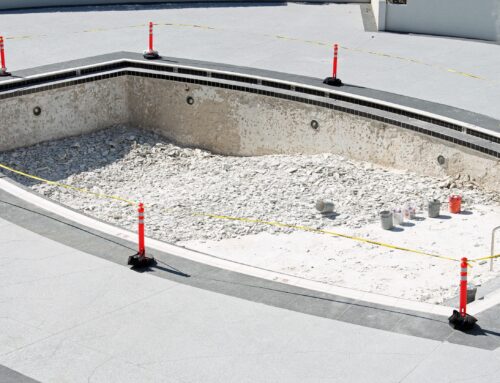
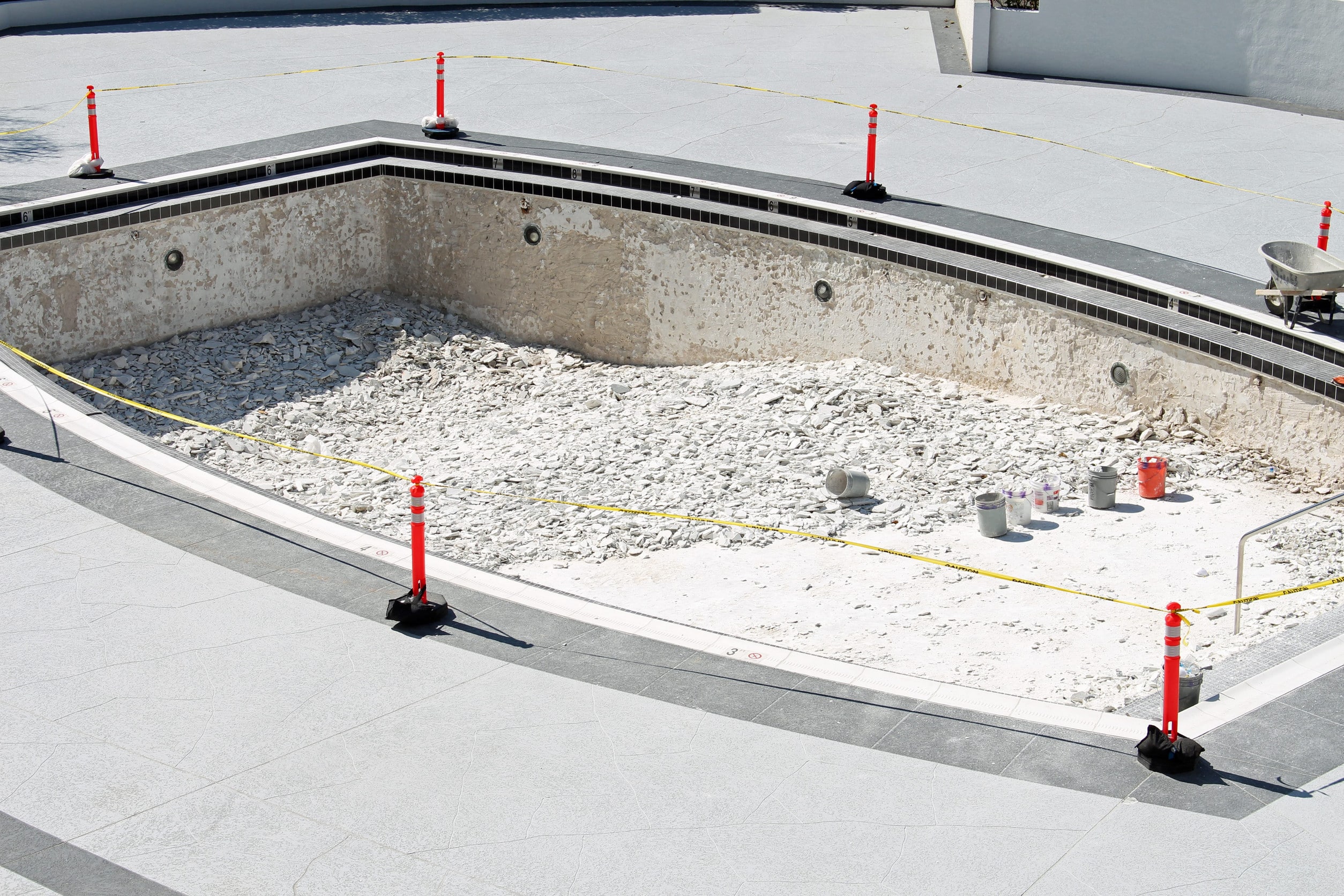
- Demolish the pool shell using suitable equipment.
- Separate materials where practical for appropriate disposal or recycling.
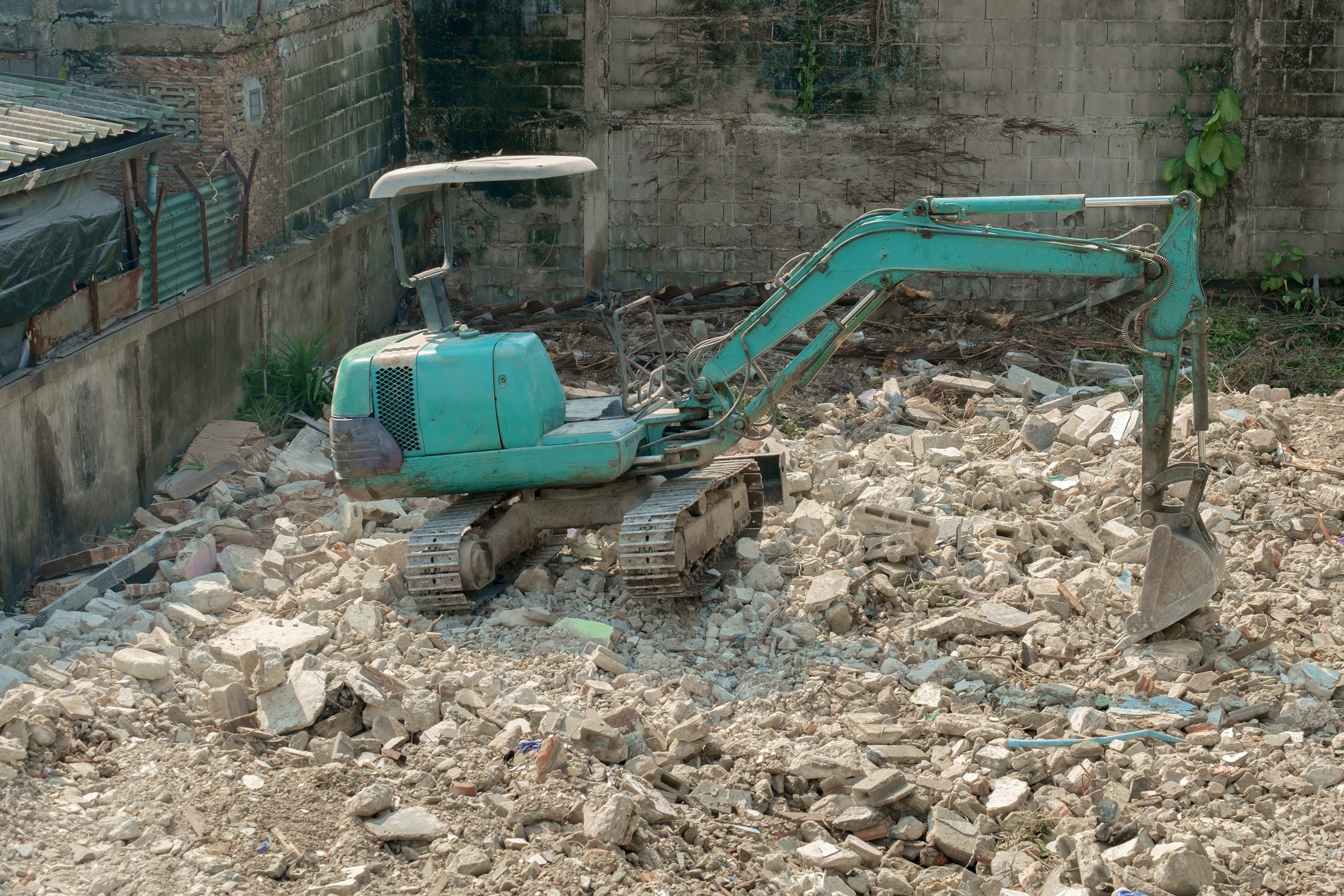
- Load and remove concrete, fibreglass, soil and other waste.
- Excavate unsuitable material from the former pool area.
- Place approved backfill in suitable layers.
- Compact the fill to reduce settlement risk.
- Finish the surface according to the agreed landscaping or property plan.
What Can You Use the Area For After Removal?
Once the pool has been removed and the area prepared, the space can be adapted to suit the property.
Possible uses include:
- Lawn.
- Garden beds.
- Outdoor entertaining space.
- Paving.
- A play area.
- Vehicle access, where the ground is prepared appropriately.
- A shed or other future structure, subject to design and engineering requirements.
- Additional space for a renovation or extension, subject to approvals.
The finished result depends on what is placed below and above the surface. Backfill must be suitable for the proposed use, and compaction should be completed properly to help limit future settlement.
For a simple lawn area, the final stage may involve topsoil and turf or grass seed. A paved area or future structure may require more detailed preparation.
Tell the contractor about your plans before the pool is removed. This allows the excavation and reinstatement work to be considered as one project.
Frequently Asked Questions
How long does inground pool removal take?
The time required depends on the pool size, construction, access, weather, waste volume and site conditions. A contractor can give a more accurate timeframe after inspecting the property.
Can an inground pool be removed from a property with limited access?
Yes, but restricted access can affect the machinery used, handling method, project duration and cost. A site assessment is needed to plan the work safely.
What happens to the waste from an inground pool?
Demolition waste is removed from the property and managed according to its material type and disposal requirements. Concrete, fibreglass, soil, metal and other materials may need separate handling.
Do I need approval before removing an inground pool?
Approval and notification requirements can vary according to the council area, property and proposed work. Check the applicable requirements before demolition starts and ask the contractor what documentation may be needed.
Can the area be used for future construction?
It may be possible, but future construction requires suitable ground preparation and may require engineering advice or additional approval. Explain your plans before removal so the site can be prepared accordingly.
How Can Splash Swimming Pool Removals Help?
At Splash Swimming Pool Removals, we help homeowners, property owners and businesses with inground pool removal Sydney safely and efficiently.
Our team has years of experience in swimming pool demolition Sydney, and they know how to handle common issues and site access challenges across the Northern suburbs, Eastern suburbs, Inner West, and Southern suburbs.
If you are ready to reclaim the space taken up by an in-ground pool, read our in-ground pool removal web page and contact the team to arrange your assessment and a clear, no-obligation quote.




Leave A Comment